TurnB Approach
- Analysed existing inventory management and manual reordering practices to identify operational inefficiencies.
- Conducted detailed discussions with product category managers to understand category-specific requirements and reorder criteria across different product types.
- Applied scientific, data-driven methods to calculate optimal reorder points and reorder quantities, factoring in supplier lead times, demand variability, and minimum display quantities.
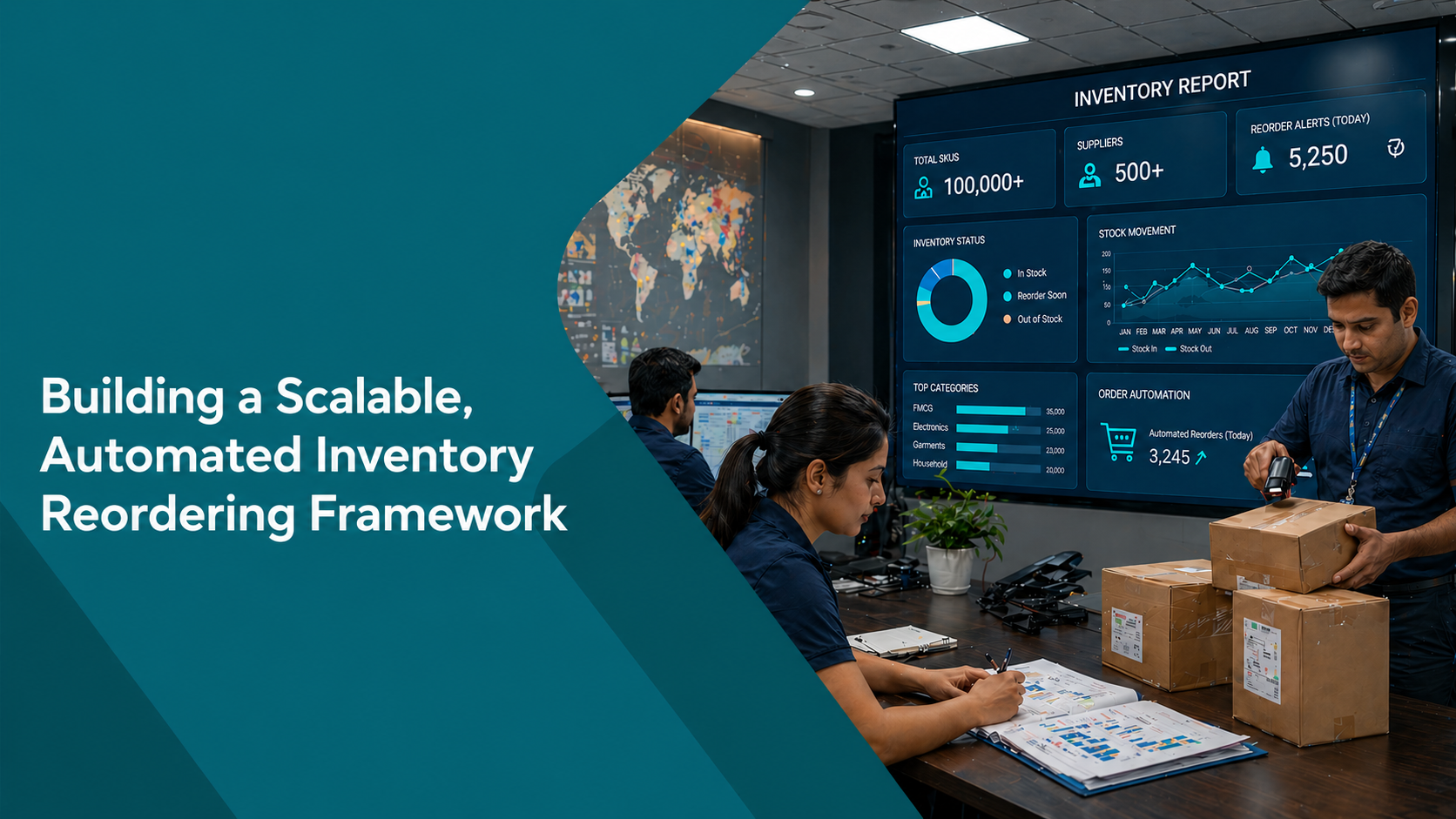
- Designed and implemented an automated inventory replenishment system for locally procured SKUs.
- Integrated the automated reordering solution with existing procurement software to enable real-time updates and ensure seamless adoption.


Implications
- 67% reduction in manual workload, with automated SKU-level reorder recommendations saving time and reducing operational costs.
- Optimised inventory management, preventing stockouts and reducing overstocking, improving capital utilisation and product availability.
- Enhanced supplier management, with automated ordering improving transparency and strengthening supplier relationships.
- Improved operational performance, as streamlined procurement enabled consistent product availability and improved customer experience.
- High-volume automation, with thousands of SKUs reordered daily, minimising manual intervention and improving order accuracy.
- Reduced opportunity loss, as timely reordering of high-performing SKUs lowered daily sales losses and improved revenue capture.

Enquire Now